
 Written by
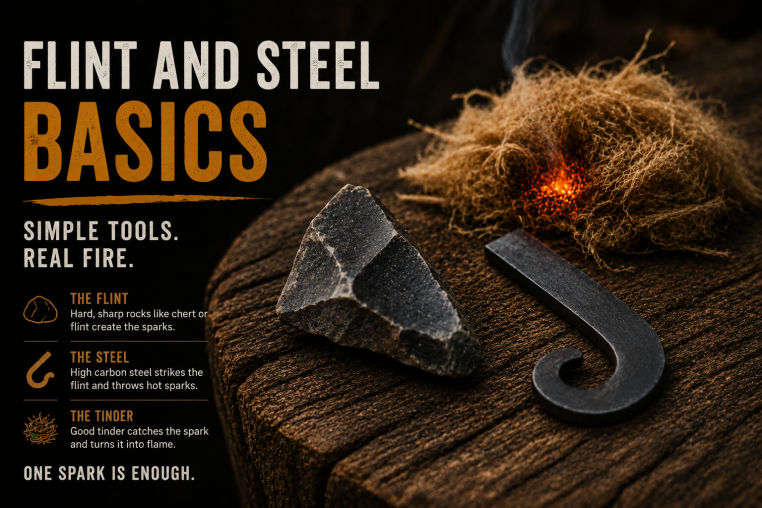
 Flint and Steel Basics
Long before disposable lighters existed, men carried fire in a far simpler form: steel, stone, tinder, and skill.
Flint and steel remains one of the oldest reliable methods of fire starting ever used. It is primitive, effective, and still works today exactly as it did centuries ago.
How Flint and Steel Works
Despite what many people think, the flint itself does not create the spark.
The sharp edge of the flint shaves tiny fragments from the steel striker. Those fragments ignite from friction and oxygen, creating hot sparks that land on the char cloth.
The char cloth catches the spark and begins glowing with an ember.
From there, the ember is transferred into a tinder bundle and blown into flame.
What You Need
A traditional flint and steel setup includes:
- Flint or similar hard stone
- Carbon steel striker
- Char cloth
- Tinder bundle
- Kindling and fuel wood
Without char cloth or good tinder, sparks alone usually are not enough.
Choosing the Right Flint
Real flint works best, but other hard sharp stones can work as well, including:
- Chert
- Quartz
- Jasper
The key is a sharp edge capable of shaving tiny particles from the steel.
Rounded smooth stones generally perform poorly.
The Importance of Carbon Steel
Not all steel works.
Traditional high-carbon steel throws sparks well. Stainless steel usually does not.
That is why dedicated fire strikers are specifically designed for primitive firecraft.
How to Strike Properly
Place the char cloth near the top edge of the flint.
Then strike downward with the steel at an angle. The goal is not brute force. The goal is controlled contact that throws sparks directly onto the cloth.
Good technique matters more than strength.
Once the spark catches, the cloth will begin glowing orange-red.
Building the Flame
The ember itself is not the fire.
After the char cloth catches, place it carefully into a dry tinder bundle and begin blowing steadily.
As oxygen feeds the ember, the tinder will begin smoking heavily before bursting into flame.
This moment is what primitive firecraft is all about.
Why Learn Flint and Steel Today?
Modern tools are faster. No one denies that.
But flint and steel teaches something modern convenience often removes:
- patience
- preparation
- awareness
- respect for fire itself
There is also a satisfaction in creating flame from stone, steel, and skill that modern lighters simply cannot replace.
A Skill Worth Preserving
Primitive firecraft connects us directly to thousands of years of human survival and craftsmanship.
The process is simple, but it rewards practice and discipline.
Tinderlight char cloth is proudly made in the USA by Knights Woodworks.
One spark is enough.