
 Written by
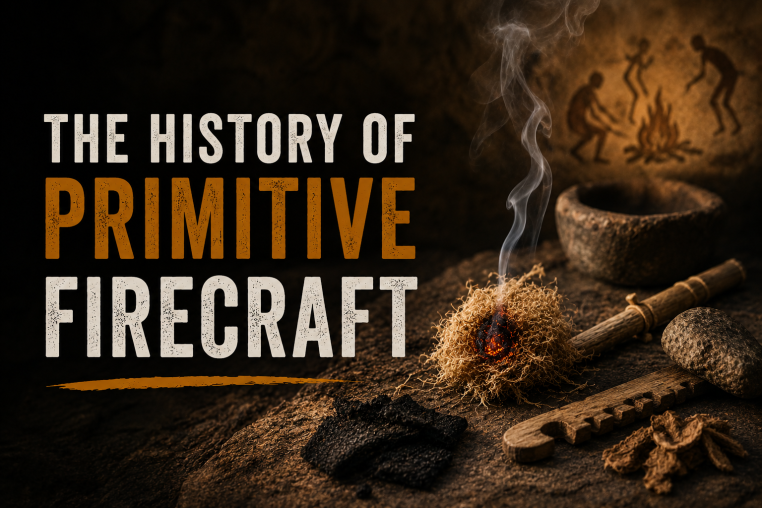
 Fire changed human history.
Long before electricity, engines, or modern tools, the ability to create flame meant survival. Fire provided warmth, protection, cooked food, purified water, and allowed men to endure environments that would otherwise kill them.
Primitive firecraft is not a modern hobby. It is one of humanity’s oldest skills.
Before Matches and Lighters
For most of human history, fire was never guaranteed.
People guarded embers carefully because losing fire could mean starting over from nothing. Entire communities sometimes preserved coals overnight simply to avoid the difficulty of rekindling flame the next day.
Modern convenience has made fire effortless. Primitive firecraft reminds us it once required patience and skill.
Early Fire Starting Methods
The earliest humans likely discovered fire from natural sources such as lightning strikes or wildfires. Over time, they learned to preserve and transport embers.
Eventually, mankind learned to create fire intentionally.
Some of the earliest methods included:
- Hand drills
- Bow drills
- Fire plows
- Flint and steel
- Percussion fire starting
Each method required practice and understanding of materials.
Flint and Steel
Flint and steel became one of the most reliable fire-starting methods for centuries.
A sharp stone would shave tiny fragments from high-carbon steel. Those fragments ignited into sparks and landed on charred tinder material such as char cloth.
This method became widely used because it worked consistently and allowed people to carry reliable fire-making tools almost anywhere.
The Role of Char Cloth
Char cloth became popular because it catches sparks extremely well.
The material is created by heating cloth in a low-oxygen environment until it carbonizes. The resulting fabric ignites easily from even weak sparks.
For generations, char cloth served as one of the most trusted ember materials in traditional fire kits.
Firecraft Around the World
Different cultures developed their own fire-making traditions depending on local materials and environments.
Some used bamboo friction methods. Others relied on pyrite and flint. Indigenous peoples across the world mastered unique techniques adapted to their climates and resources.
Despite the differences, the principle remained the same:
fuel, oxygen, heat, and skill.
Why Primitive Firecraft Still Matters
Modern fire starters are faster and easier. But primitive firecraft teaches lessons that convenience often removes:
- preparation
- patience
- problem solving
- awareness of materials
- self-reliance
There is also a connection to history in creating flame the same way countless generations once did.
Primitive firecraft reminds us that survival once depended on knowledge carried in the hands, not batteries or disposable tools.
Keeping the Tradition Alive
Today, many outdoorsmen, bushcrafters, survivalists, and craftsmen continue practicing primitive firecraft not because it is easy, but because it is meaningful.
The process slows you down. It forces attention. It rewards discipline.
And when the ember finally glows and the tinder bursts into flame, you understand why this skill mattered for thousands of years.
Tinderlight char cloth is proudly made in the USA by Knights Woodworks.
One spark is enough.