 Written by
 At first glance, char cloth does not look impressive.
It is lightweight, blackened fabric that appears almost burned already. But that simplicity is exactly what makes it one of the most effective traditional fire-starting materials ever used.
Char cloth works because it transforms weak sparks into lasting embers.
What Is Char Cloth?
Char cloth is fabric that has been heated in a low-oxygen environment until it carbonizes.
Instead of turning fully to ash, the material becomes:
- dry
- lightweight
- carbon-rich
- extremely easy to ignite
The resulting cloth catches sparks remarkably well and allows the ember to spread slowly across the material.
The Science Behind It
Normal fabric burns quickly because it still contains oils, moisture, and volatile compounds.
Char cloth has already gone through much of the burning process.
What remains is carbonized material that ignites at a much lower energy level.
That is why even small sparks from:
- flint and steel
- ferro rods
- traditional strikers
can create a glowing ember.
Why Sparks Matter
Primitive sparks are tiny.
Unlike a modern flame, they do not provide continuous heat. They only transfer a brief burst of energy.
Most natural materials cannot catch such weak sparks reliably.
Char cloth solves this problem by:
- igniting easily
- holding heat
- allowing the ember to grow slowly
Once glowing, the ember becomes stable enough to transfer into a tinder bundle.
Why Cotton Works Best
Traditional char cloth is usually made from 100% cotton material.
Cotton carbonizes evenly and creates excellent ember retention.
Synthetic fabrics generally melt instead of charring properly, making them poor choices for primitive firecraft.
How the Ember Spreads
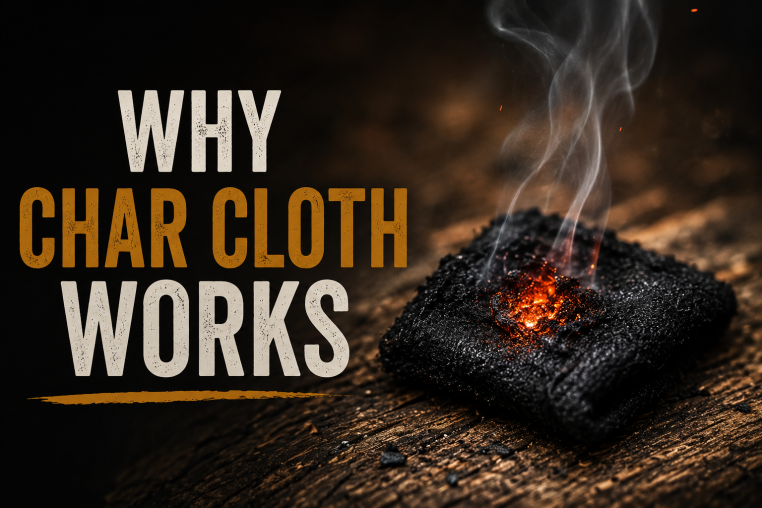
When the spark lands successfully, a tiny section of the char cloth begins glowing orange-red.
The ember slowly spreads across the cloth as oxygen feeds the carbonized material.
This controlled burn gives you time to transfer the ember into your tinder bundle without losing it.
Why Firecraft Enthusiasts Still Use It
Modern fire starters exist everywhere. But char cloth remains popular because it:
- works reliably
- catches sparks easily
- stores well
- weighs almost nothing
- connects users to traditional firecraft
There is also satisfaction in using methods that have worked for generations.
Primitive firecraft is slower than modern convenience, but that is part of its value.
Common Mistakes With Char Cloth
Using Synthetic Fabric
Only natural material carbonizes properly.
Allowing Moisture
Damp char cloth becomes difficult or impossible to ignite.
Smothering the Ember
The ember still needs airflow to survive.
Using Poor Tinder
Char cloth creates the ember, but good tinder creates the flame.
A Simple Material With Ancient Purpose
Char cloth may look insignificant, but it solved one of the oldest problems in survival:
how to reliably turn sparks into fire.
That simple piece of blackened cloth helped generations create warmth, light, cooked food, and survival itself.
Tinderlight char cloth is proudly made in the USA by Knights Woodworks.
One spark is enough.